









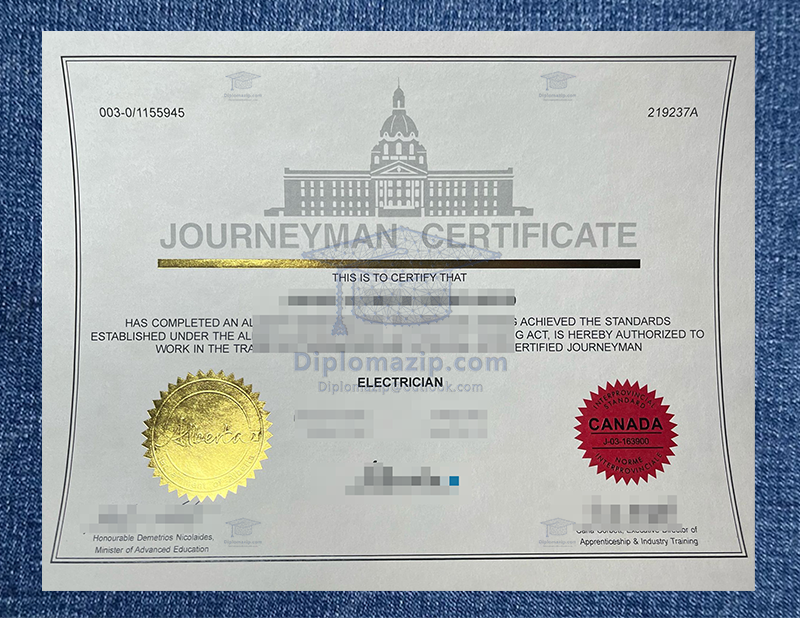
I. What Is a Journeyman Certificate? It Is Not a School
Many people mistakenly believe that a “Journeyman Certificate” refers to a school, but it is not the name of an educational institution; rather, it is a type of professional certification. Journeyman Certificate
The Journeyman Certificate primarily exists within the North American vocational system, particularly in the United States and Canada.
It signifies that an individual has completed training in a specific trade and possesses the ability to work independently, marking a crucial step in the progression from “Apprentice” to “Journeyman.”
II. Analysis of the Vocational System: The Path from Apprentice to Journeyman
1. Three Core Stages
In the North American technical vocational system, there are typically three levels:
- Apprentice
- Journeyman
- Master
The Journeyman Certificate is the certification for the second stage, signifying that you have acquired practical skills and are ready to formally enter the workforce.
2. Commonly Applicable Industries
This certificate is widely used in technical trades, such as:
- Electrician
- Plumber
- Welder
- Carpenter
These professions are in high demand in Europe and the United States.
III. How to Obtain a Journeyman Certificate
1. Complete an Apprenticeship
Generally requires:
- 2–5 years of apprenticeship experience
- On-the-job training + classroom instruction
This model is similar to “learning while working.”
2. Pass the Professional Certification Exam
After completing training, candidates must take an industry-specific exam covering:
- Technical theory
- Practical skills
- Safety regulations
Upon passing, the Journeyman Certificate is awarded.
IV. Key Advantages of the Journeyman Certificate
1. High Practicality (Skills-Oriented)
Unlike traditional universities, this certificate:
- Emphasizes practical skills
- Directly aligns with industry needs
Allowing graduates to enter the workforce quickly.
2. Attractive Income Levels
In the U.S. and Canada, skilled tradespeople are considered high-earning blue-collar workers:
- Electricians/Plumbers Annual Salary: Approx. $50,000–$90,000
- Experienced professionals can earn even more
In some industries, earnings even exceed those of typical white-collar workers.
3. Strong Job Stability
Skilled trades have the following characteristics:
- Long-term market demand
- Resistance to complete automation
- Skills become more valuable with age
Therefore, career stability is relatively high.
4. No college degree required
One of the greatest advantages of the Journeyman Certificate is:
👉 No traditional bachelor’s degree required
This is particularly appealing to the following groups:
- Those who do not wish to pursue an academic path
- Students who hope to start working as soon as possible
V. Employment Outlook Analysis
1. Strong Market Demand in North America
With infrastructure development and labor shortages, the demand for skilled workers continues to grow.
Especially in:
- The construction industry
- The energy industry
- Manufacturing
2. Immigration and Overseas Opportunities
In Canada, skilled trades are classified as in-demand occupations, and for certain positions:
- You can apply for skilled worker immigration
- It is easier to obtain a work visa
This is also a key reason why many international students choose the skilled trades path.
3. Clear Career Development Path
After obtaining a Journeyman Certificate, you can continue to advance:
- Promote to Master Craftsman
- Become a project supervisor
- Start your own business (open a company)
The long-term career prospects are very promising.
VI. Target Audience Analysis
1. Suitable Candidates
- People who enjoy hands-on work
- Students who do not wish to pursue a traditional university path
- Those seeking rapid employment and a stable income
- Individuals planning to immigrate to North America
2. Unsuitable Candidates
- People who prefer academic research
- Those seeking office-based work
- People who are averse to physical labor